
Rays of the sun
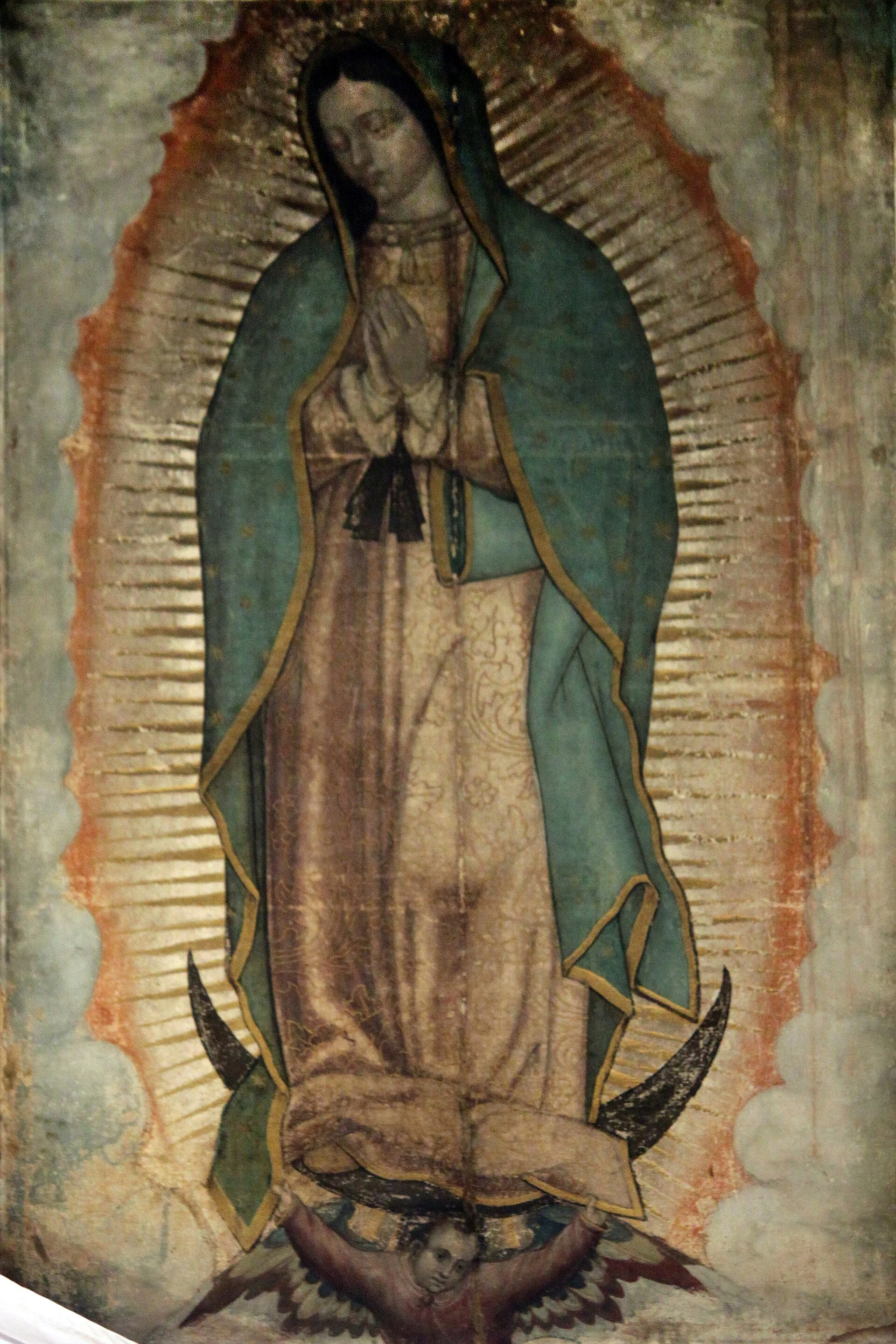
She stands in front of the sun, like the woman “clothed with the sun” in Revelation 12. The Aztecs worshipped a sun god. Here the sun is behind her, and she points beyond it to the true God.
MiraclesMarian apparitions
In December 1531, the Virgin Mary appeared four times to Juan Diego, a native Mexican convert, on a hill outside Mexico City. She left her image on his cloak, and that cloak still hangs in the Basilica of Our Lady of Guadalupe today.
The major points of the story, before you read it in full.
Mary appeared five times in December 1531: four times to St. Juan Diego and once to his uncle, Juan Bernardino.
She spoke to Juan Diego in Nahuatl, his own language, and called herself the mother of the true God.
She asked for a church to be built on Tepeyac hill, where she appeared.
The bishop, Juan de Zumárraga, asked for a sign. Mary sent Juan Diego to gather roses on the bare hilltop in the middle of December.
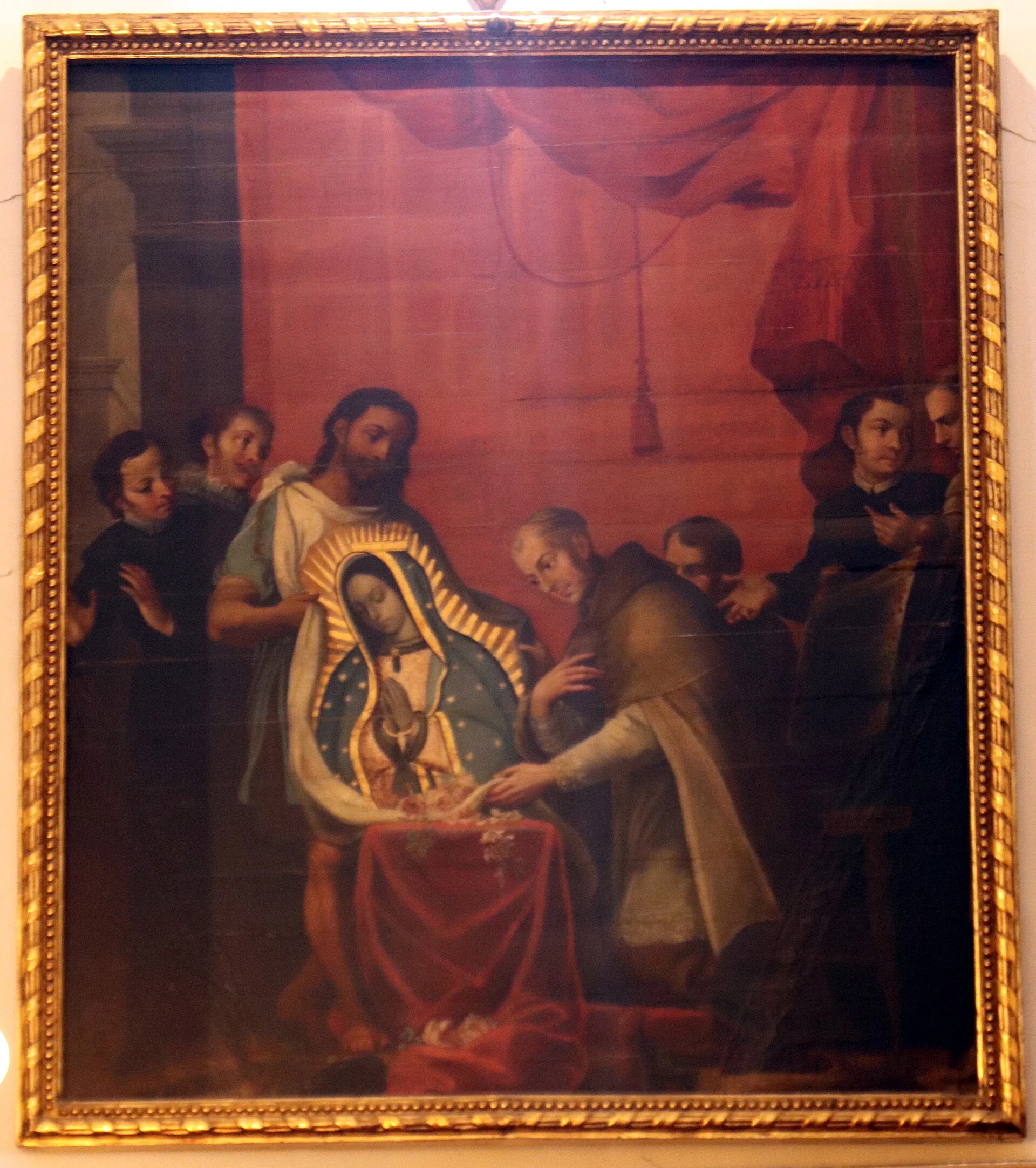
When Juan Diego opened his tilma, or cloak, before the bishop, the roses fell to the floor and her image appeared on the cloth.
Mary healed his dying uncle and told him she wished to be known as Holy Mary of Guadalupe.
Missionaries of the time recorded millions of baptisms among the native peoples in the years that followed.
The tilma still hangs in the Basilica of Our Lady of Guadalupe, one of the most visited Catholic shrines in the world.
Told in the Nican Mopohua, an account written in Nahuatl in the 1500s by Antonio Valeriano, a native scholar.
Saturday, December 9
Early in the morning, Juan Diego was walking past Tepeyac hill when he heard birdsong and a voice calling his name. At the top stood a young woman shining with light. She told him she was the Virgin Mary, mother of the true God, and asked him to tell the bishop to build a church there. The bishop listened but did not believe him. That evening Juan Diego returned to the hill, and Mary asked him to keep trying.
Sunday, December 10
Juan Diego went back to Bishop Zumárraga, who asked for a sign to prove the lady was truly from heaven. Mary met Juan Diego on the hill again and promised to give him a sign the next day.
Monday, December 11
Juan Diego's uncle, Juan Bernardino, became gravely ill. Juan Diego stayed home to care for him and did not go back to the hill.
Tuesday, December 12
Before dawn, with his uncle near death, Juan Diego set out to find a priest and took another path around the hill. Mary came to meet him anyway. “Am I not here, I who am your mother?” she asked. She told him his uncle was already well and sent him to the hilltop, where he found roses blooming in December. Mary arranged them in his tilma. When he opened it before the bishop, the roses fell to the floor and her image appeared on the cloth. The bishop and everyone in the room fell to their knees.
The next day
Juan Diego found his uncle healed. Juan Bernardino said that Mary had appeared to him too, and that she wished to be known as Holy Mary of Guadalupe. Within weeks, a small chapel was built at Tepeyac to hold the tilma.
Juan Diego's cloak is still here to see. These are the facts that have drawn pilgrims, painters and scientists to it.
The tilma is ayate, a coarse cloth woven from agave fiber, made of two pieces sewn together. Cloth like this normally wears out within a few decades.
It has lasted since 1531. For more than a century it hung with no glass to protect it from candle smoke and damp air.
In 1666, seven painters examined the tilma. They agreed that no artist could paint something so fine on cloth so rough.
On November 14, 1921, a bomb hidden in a basket of flowers exploded beneath the image. It damaged the altar and bent a brass crucifix, but the tilma was unharmed. The bent crucifix is kept at the shrine.
In 1979, scientist Philip Callahan studied the image with infrared photographs. He found no preliminary sketch under the face, hands and robes, though painters of the time normally drew one first.
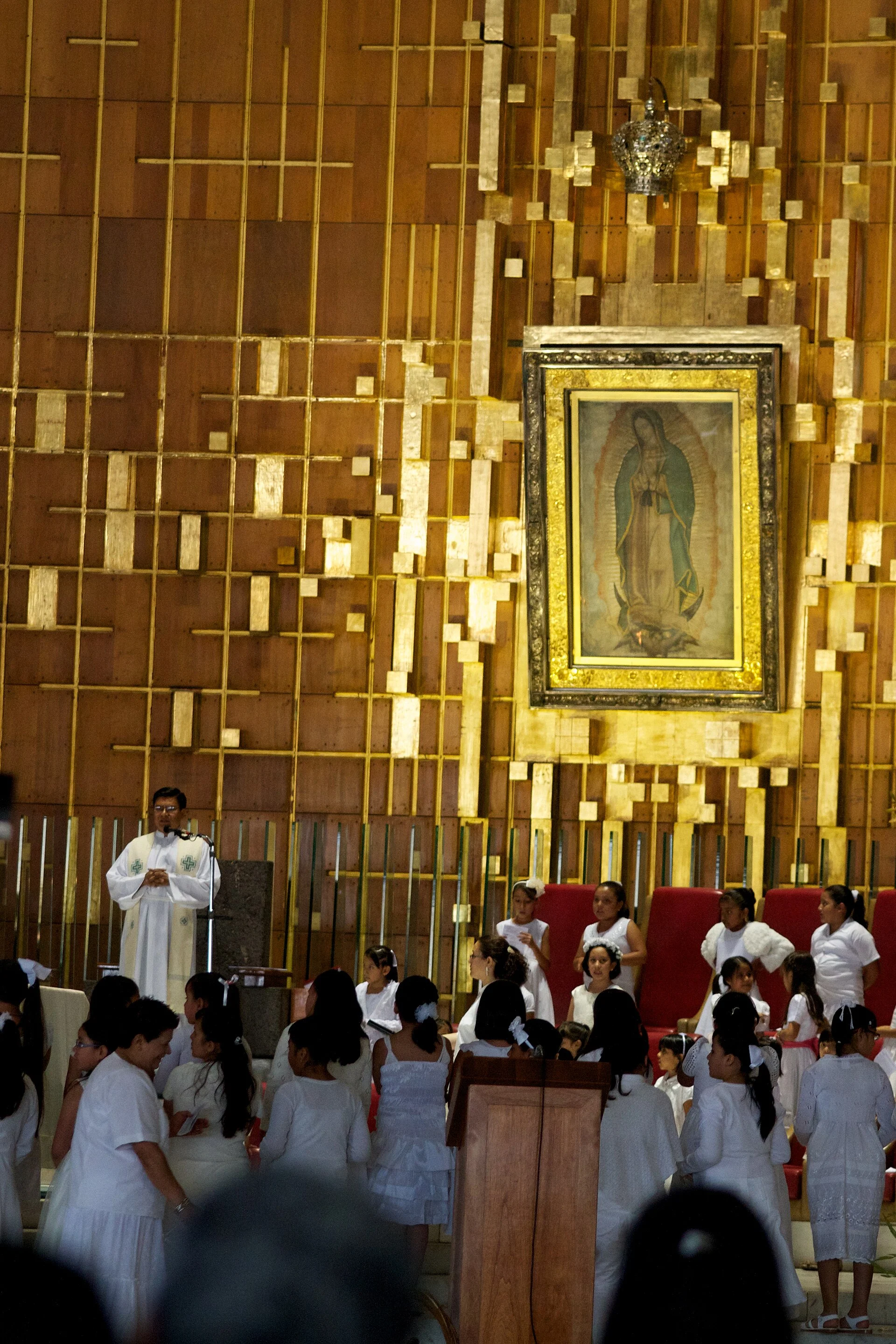
The tilma hangs in a gold frame above the main altar of the Basilica of Our Lady of Guadalupe, behind protective glass.
Every detail of the image speaks, both to the native peoples of 1531 and to readers of Revelation 12.
She stands in front of the sun, like the woman “clothed with the sun” in Revelation 12. The Aztecs worshipped a sun god. Here the sun is behind her, and she points beyond it to the true God.
Revelation 12:1 describes the same woman “with the moon under her feet.” The Church has long seen Mary in this woman.
Her blue-green mantle, edged in gold and scattered with stars, marks her as a queen who comes from heaven.
Her head is bowed and her hands are joined. She is not a goddess. She prays to God, and she invites us to do the same.
A dark ribbon is tied above her waist, understood as a sign that she is with child. She carries Jesus to the people she came to meet.
An angel with wings of many colors holds up her robe and mantle, a sign that she comes as a messenger of heaven.
Nearly five centuries later, Guadalupe still shapes the faith of the Americas.
Mexico had just lived through conquest and disease. Mary came as a mother, spoke their language and looked like one of them. Missionaries recorded millions of baptisms in the years that followed.
St. John Paul II beatified Juan Diego in 1990 and canonized him at the Basilica on July 31, 2002. His feast day is December 9.
St. Pius X named her Patroness of Latin America in 1910. Pius XII called her Empress of the Americas and named her Patroness of the Americas. In 1999, St. John Paul II asked that her feast be kept across the whole continent.
Millions of pilgrims visit Tepeyac every year, many of them around her feast on December 12.
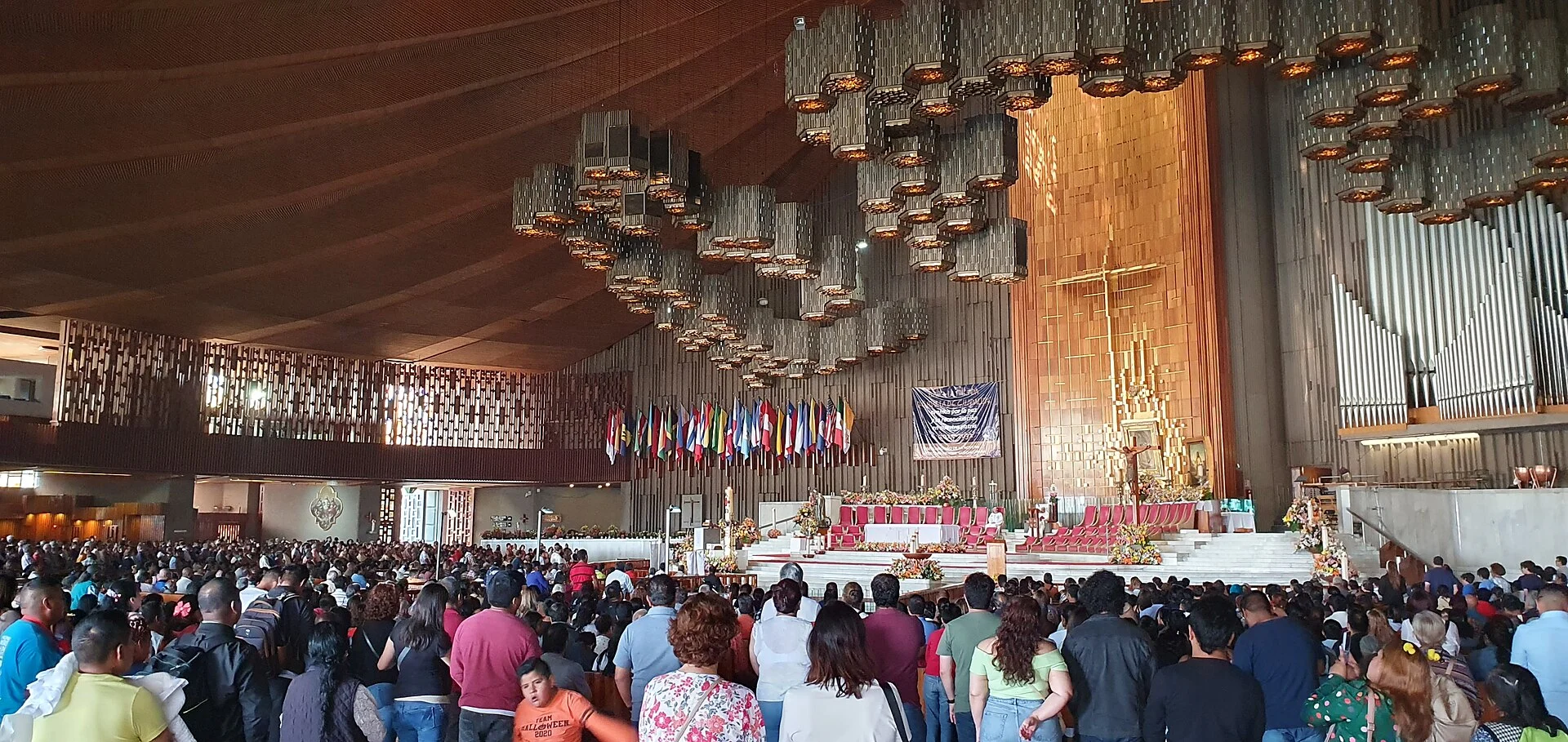
Finished in 1976, the round basilica holds the tilma above its main altar. The Old Basilica, completed in 1709, stands beside it.
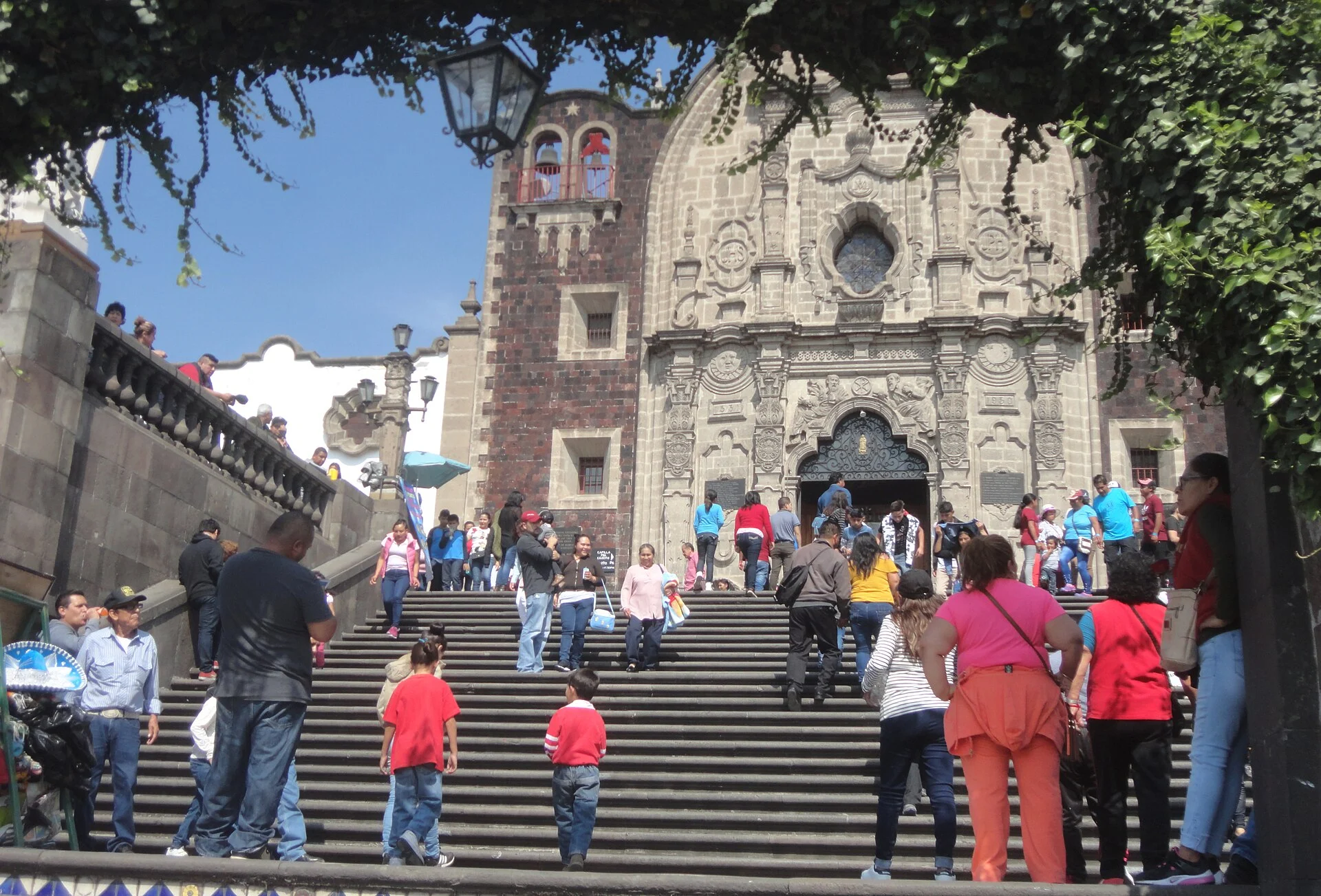
Steps climb from the basilica plaza to the Capilla del Cerrito, the small chapel on the hilltop where, by tradition, Juan Diego gathered the roses.
December 12, the day the image appeared on Juan Diego's tilma. St. Juan Diego's own feast is December 9, the day of the first apparition.
Yes. Popes have honored Our Lady of Guadalupe for centuries. Benedict XIV approved a Mass and Office for her feast in 1754, Leo XIII authorized the crowning of the image in 1895, and St. John Paul II canonized Juan Diego at the Basilica in 2002.
No. Approved apparitions are private revelations. The Catechism teaches that they do not add to the faith, but they can help people live it more fully in their time (CCC 67). Many Catholics find great help in Our Lady of Guadalupe.
In the Basilica of Our Lady of Guadalupe in Mexico City. The tilma hangs in a gold frame above the main altar, and visitors can pass below it to see it up close.
Mary gave the name to Juan Diego's uncle, Juan Bernardino, when she healed him. Guadalupe was already the name of a famous Marian shrine in Spain. Some scholars think the name may also echo a word in Nahuatl, the language Mary spoke at Tepeyac.
Pope Pius XII gave her this title. St. John Paul II later called her Mother of the Americas and asked that her feast on December 12 be celebrated across the whole continent.
“Am I not here, I who am your mother?”
Her words are written above the main entrance of the Basilica. Bring her your worries, and let her lead you to her Son.
Image credits, via Wikimedia Commons: The tilma of St. Juan Diego (public domain); Painting of Juan Diego before the bishop (photo by Thank You (24 Millions) views, CC BY 2.0); The tilma above the altar (Brian Gratwicke, CC BY 2.0); Inside the Basilica (José Luiz, CC BY-SA 4.0); Capilla del Cerrito (Juan Carlos Fonseca Mata, CC BY-SA 4.0).