The popes
From St. Peter to Pope Leo XIV, the popes have shepherded the Church for nearly two thousand years. Meet our Holy Father today, learn what the pope does and how a new pope is chosen.
Pope Leo XIV
"Peace be with you all!"His first words from the balcony of St. Peter's, May 8, 2025
- Born
- Robert Francis Prevost, on September 14, 1955, in Chicago, Illinois.
- Elected
- May 8, 2025, as the 267th Bishop of Rome.
- Firsts
- The first pope from the United States and the first Augustinian pope.
- Before
- A missionary priest in Peru, leader of the Augustinian order, Bishop of Chiclayo (2015 to 2023) and head of the Vatican office that helps choose bishops.
He chose the name Leo in memory of Pope Leo XIII, who taught about the dignity of workers during the first industrial revolution. Pope Leo XIV wants the Church to bring that same teaching to a new age of change, including artificial intelligence. Read his words
What does the pope do?
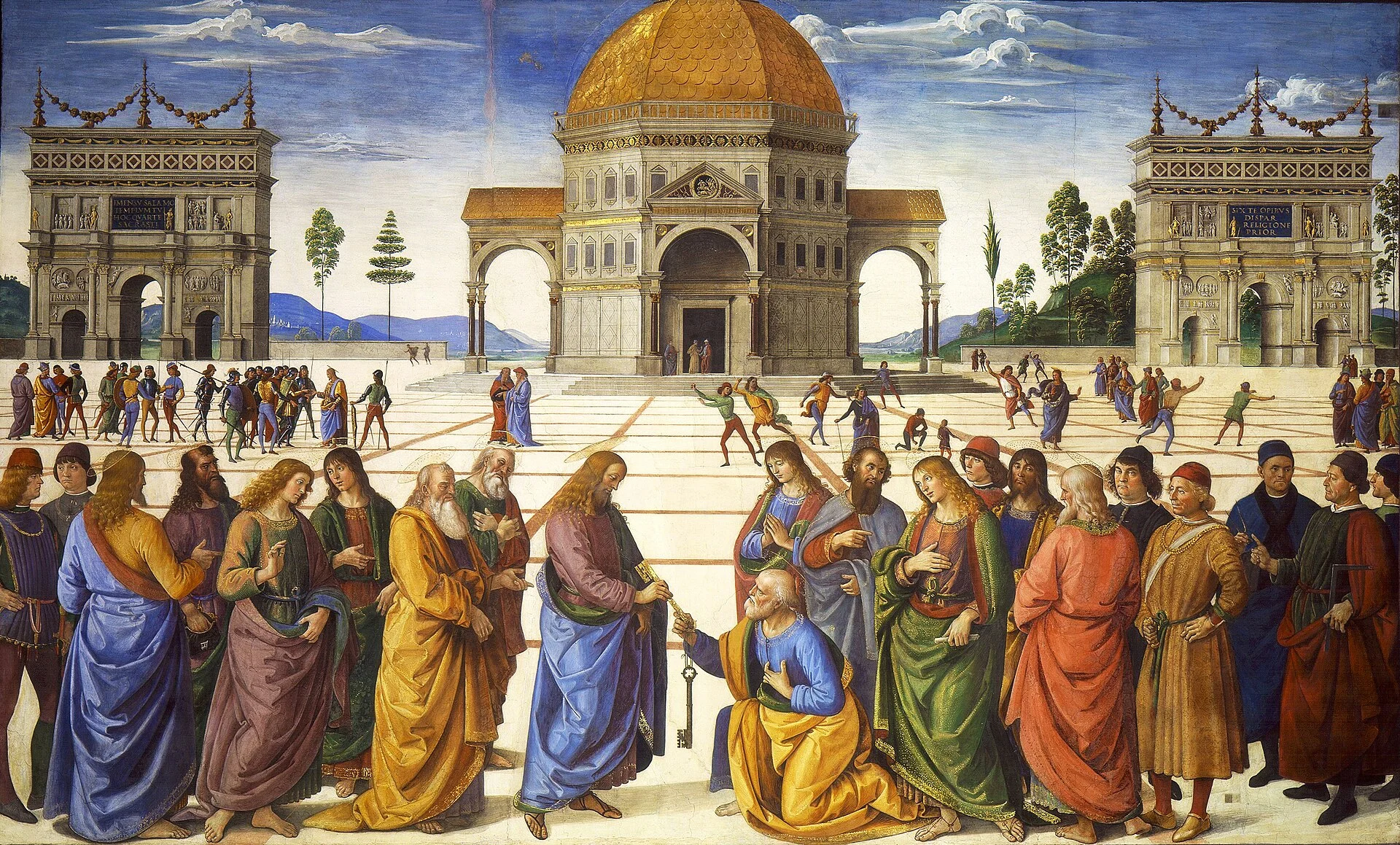
The pope is the visible shepherd of the Catholic Church on earth. His office began with Jesus himself.
"You are Peter, and on this rock I will build my church. I will give you the keys of the kingdom of heaven."
Matthew 16:18-19
Bishop of Rome
The pope is first the bishop of one city, Rome, where St. Peter preached, died as a martyr and was buried.
Successor of Peter
Jesus made Peter the rock of his Church and gave him the keys. Each pope carries on Peter's office in an unbroken line.
Shepherd of the whole Church
Together with the bishops, he teaches, guides and keeps more than a billion Catholics united in one faith.
The Catechism calls the pope "the perpetual and visible source and foundation of the unity both of the bishops and of the whole company of the faithful." Catechism 882
How a new pope is chosen
The election of a pope is called a conclave, from the Latin for with a key, because the cardinals are locked away until they choose.
- 1
The Chair of Peter is empty
When a pope dies or resigns, the cardinals come to Rome. The Church prays for a new shepherd.
- 2
The cardinals gather
Cardinals under the age of 80 enter the conclave in the Sistine Chapel, cut off from the outside world.
- 3
They vote in secret
Each cardinal writes one name on a paper ballot. A new pope needs a two-thirds majority, with up to four votes a day.
- 4
Black or white smoke
The ballots are burned in a stove. Black smoke from the chimney means no one has been chosen yet. White smoke means a new pope.
- 5
Habemus Papam
The chosen cardinal accepts and takes a new name. From the balcony of St. Peter's comes the news, "We have a pope," and he gives his first blessing.
Popes of our time
An unbroken line of 267 popes. Here are the shepherds of the last century, and the fisherman where it began.
2025 to today
Pope Leo XIV
Robert Francis Prevost, Chicago, United States
An Augustinian missionary who spent many years in Peru. He chose his name in honor of Pope Leo XIII and the Church's social teaching.
2013 to 2025
Pope Francis
Jorge Mario Bergoglio, Buenos Aires, Argentina
The first pope from the Americas and the first Jesuit pope. He spoke often of mercy and care for the poor, and died on Easter Monday, April 21, 2025.
2005 to 2013
Pope Benedict XVI
Joseph Ratzinger, Marktl, Germany
A great theologian and teacher. In 2013 he resigned, the first pope to do so in nearly 600 years. He died on December 31, 2022.
1978 to 2005
St. John Paul II
Karol Wojtyła, Wadowice, Poland
The first non-Italian pope in more than 450 years. He traveled to over 120 countries and was declared a saint in 2014.
1978
Pope John Paul I
Albino Luciani, Italy
Known as the smiling pope, he served only 33 days. He was beatified in 2022.
1963 to 1978
St. Paul VI
Giovanni Battista Montini, Concesio, Italy
He guided the Second Vatican Council to its close and was the first pope to travel by plane to other continents. Declared a saint in 2018.
1958 to 1963
St. John XXIII
Angelo Giuseppe Roncalli, Sotto il Monte, Italy
Beloved as Good Pope John, he opened the Second Vatican Council in 1962. Declared a saint in 2014.
1939 to 1958
Pope Pius XII
Eugenio Pacelli, Rome, Italy
He led the Church through the Second World War and in 1950 defined the dogma of Mary's Assumption into heaven.
Died in Rome, around AD 64 to 67
St. Peter, the first pope
Simon, a fisherman from Galilee
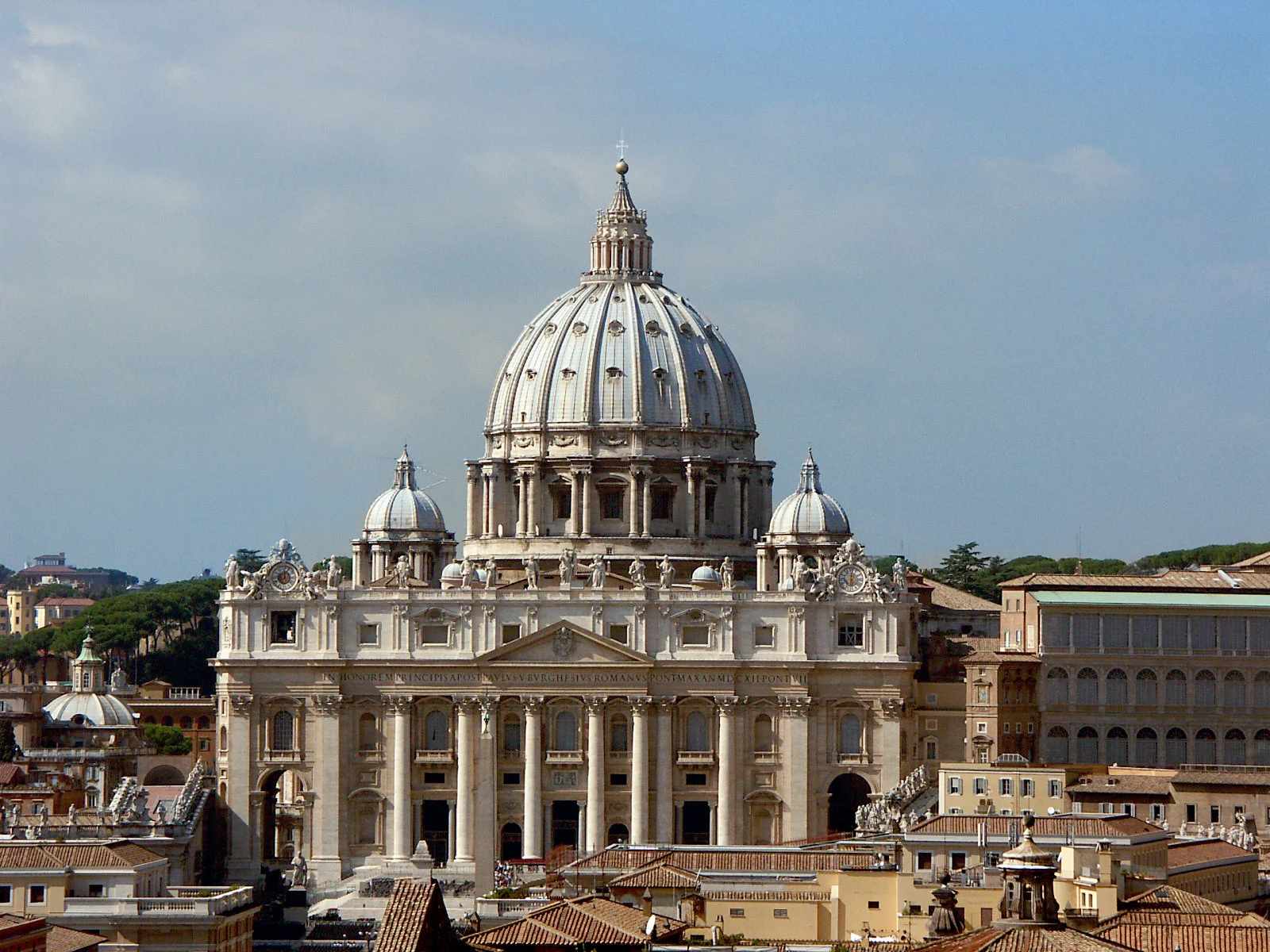
Called by Jesus to be a fisher of men and named the rock of the Church. He died a martyr in Rome, and his tomb lies beneath St. Peter's Basilica.
Common questions
What does the word pope mean?
Pope comes from the Latin and Greek word papa, meaning father. Catholics also call him the Holy Father.
How many popes have there been?
Pope Leo XIV is the 267th Bishop of Rome, in a line that goes back to St. Peter.
Do Catholics worship the pope?
No. Worship belongs to God alone. Catholics respect the pope, listen to his teaching and pray for him as the shepherd Christ has given the Church.
Is the pope always right?
No. Papal infallibility is narrow. It applies only when the pope, as shepherd and teacher of all the faithful, solemnly defines a teaching on faith or morals (Catechism 891). His personal opinions, writings and decisions are not infallible, and he needs God's mercy like everyone else.
Why does a new pope choose a new name?
It is a custom that goes back more than a thousand years. The name often honors an earlier pope or saint and hints at what the new pope hopes for. Pope Leo XIV chose his name in memory of Pope Leo XIII, who wrote about workers and human dignity in the industrial age.
Can a pope resign?
Yes. Church law allows a pope to resign if he does so freely (Code of Canon Law, canon 332). Pope Benedict XVI resigned in 2013.
Where does the pope live?
In Vatican City, the smallest independent country in the world, located inside the city of Rome. St. Peter's Basilica stands at its heart.
Pray for our Holy Father
"Let us pray for our Pope Leo. May the Lord preserve him, give him life, make him blessed upon the earth, and not hand him over to the will of his enemies."
Traditional prayer for the pope